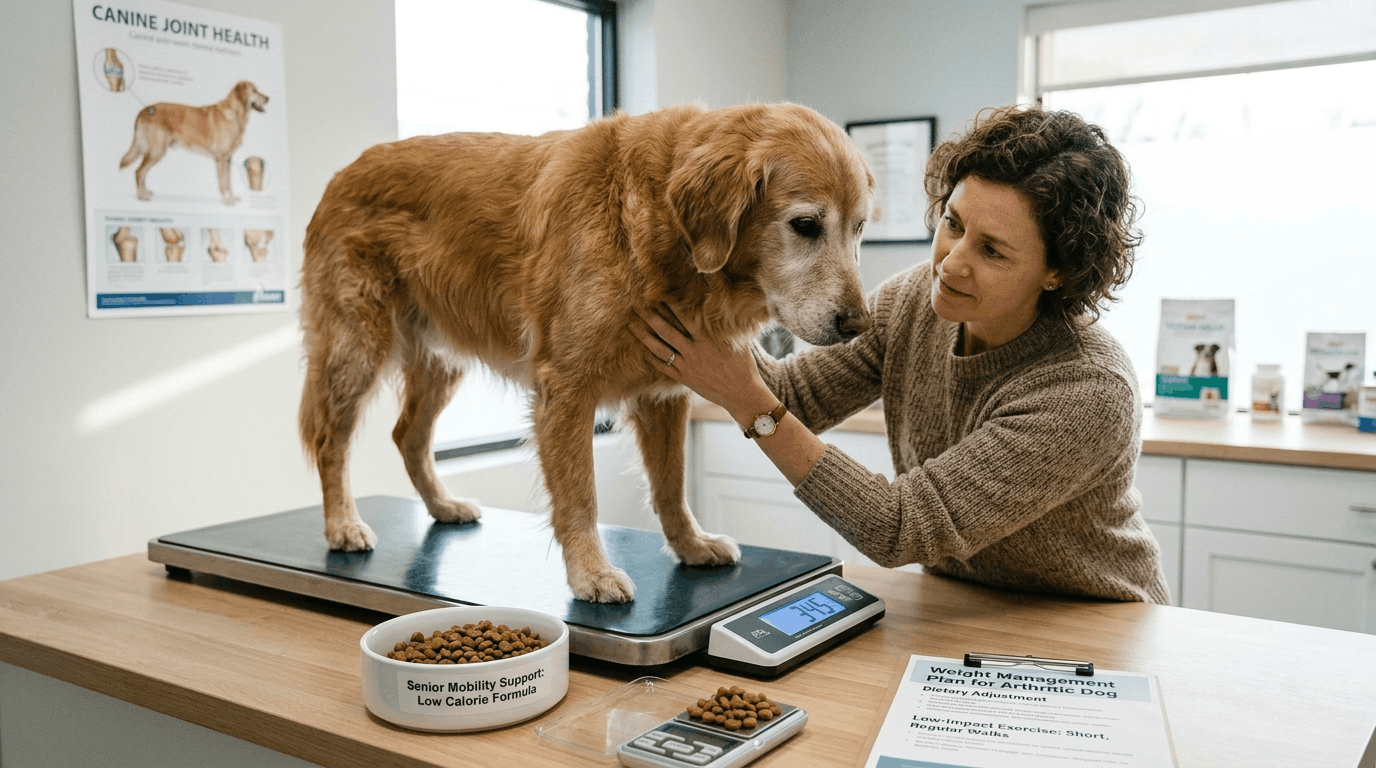
Dogs with arthritis often struggle with daily movement, stiffness, and ongoing discomfort. Many owners focus on medication, supplements, or orthopedic beds first. While those tools help, one factor has an even greater impact on joint health over time. Dog arthritis weight management plays a major role in reducing pain, improving mobility, and protecting aging joints from additional stress.
Even a few extra pounds place significant pressure on already inflamed joints. Over time, excess weight increases strain on the hips, knees, elbows, and spine. As a result, arthritic dogs may become less active, more uncomfortable, and increasingly reluctant to move.
Maintaining a healthy body condition helps reduce that pressure naturally. Additionally, proper weight control may improve energy levels, flexibility, sleep quality, and overall quality of life. For many dogs, losing weight becomes one of the most effective ways to manage arthritis symptoms safely.
Why Extra Weight Worsens Arthritis
Arthritic joints already experience inflammation and cartilage breakdown.
When dogs carry excess body fat, their joints absorb additional force during every movement. Walking, standing, climbing stairs, and even lying down become harder over time. Heavier dogs also tire more quickly, which often leads to reduced exercise and worsening stiffness.
This cycle becomes difficult to break without proper weight control.
Dog arthritis weight management reduces pressure on damaged joints while helping dogs move more comfortably throughout the day.
Inflammation Often Increases With Obesity
Body fat affects more than appearance.
Excess fat tissue produces inflammatory compounds that may worsen arthritis symptoms internally. Therefore, overweight dogs often experience greater inflammation than lean dogs with similar joint conditions.
Reducing body fat may lower overall inflammation naturally. As inflammation decreases, many dogs move more freely and experience less discomfort during activity.
Healthy weight management supports the entire body, not just the joints.
Mobility Improves When Dogs Lose Weight
Even small weight reductions can create noticeable improvements.
Many owners observe better mobility after dogs lose only a few pounds. Dogs may stand more easily, walk longer distances, and appear more willing to play again.
Additionally, reduced body weight places less strain on muscles and ligaments surrounding arthritic joints. This support helps dogs maintain better balance and movement overall.
Dog arthritis weight management often improves comfort faster than many owners expect.
Reduced Pain Encourages More Activity
Pain discourages movement naturally.
When dogs hurt during walks or exercise, they become less active. Unfortunately, inactivity weakens muscles and increases stiffness further.
Weight loss helps reduce pain during movement. As discomfort decreases, dogs often regain confidence and become more willing to exercise regularly again.
This increased activity strengthens muscles that support aging joints.
Muscle Strength Matters For Joint Support
Strong muscles help stabilize arthritic joints.
Dogs that maintain healthy muscle tone usually experience better balance and movement control. However, overweight dogs often lose muscle strength because activity becomes more difficult and painful.
Proper nutrition and safe exercise support both weight control and muscle maintenance simultaneously.
Dog arthritis weight management works best when combined with gentle movement routines.
Low-Impact Exercise Helps Protect Joints
Exercise remains important even for arthritic dogs.
However, high-impact activities may worsen inflammation or cause additional strain. Low-impact exercise supports weight loss while protecting sensitive joints more effectively.
Short walks, swimming, controlled play sessions, and gentle stretching often work well for arthritic dogs. Consistency matters more than intensity.
Frequent moderate activity usually provides better results than occasional strenuous exercise.
Portion Control Prevents Overfeeding
Many owners unintentionally overfeed their dogs.
Treats, table scraps, large meal portions, and free feeding all contribute to excess weight gain over time. Additionally, aging dogs generally require fewer calories because metabolism slows with age.
Measuring meals carefully helps maintain better calorie control. Feeding based on body condition instead of appetite alone also improves long-term results.
Dog arthritis weight management often begins with more accurate feeding habits.
Healthy Treat Choices Matter
Treats add calories quickly.
Many commercial treats contain high fat levels, artificial ingredients, and unnecessary fillers. Frequent rewarding may contribute significantly to weight gain, especially in less active dogs.
Healthier alternatives include carrots, green beans, cucumber slices, blueberries, or small pieces of lean meat.
Owners should also reduce meal portions slightly when giving additional treats throughout the day.
Joint-Friendly Diets Support Weight Loss
Not all dog foods support arthritis management equally.
Foods rich in lean protein help maintain muscle mass during weight reduction. Meanwhile, balanced fiber content may improve fullness and appetite control naturally.
Omega-3 fatty acids from fish oil may also help reduce inflammation around arthritic joints. Additionally, glucosamine and chondroitin sometimes support cartilage health over time.
Dog arthritis weight management improves when nutrition supports both joint function and healthy body condition.
Frequent Weigh-Ins Help Track Progress
Weight changes happen gradually.
Regular weigh-ins help owners monitor progress before problems become severe. Many veterinarians recommend monthly weight checks during active weight-loss programs.
Tracking body condition visually also matters. Ribs should feel easy to locate without excessive fat covering. Dogs should maintain a visible waistline when viewed from above.
Small consistent improvements usually create the best long-term outcomes.
Slow Weight Loss Works Best
Rapid weight loss may create additional health risks.
Gradual changes help preserve muscle mass while reducing joint pressure steadily. Additionally, slower progress often feels more sustainable for owners and dogs alike.
Most veterinarians recommend controlled calorie reduction combined with safe exercise routines.
Dog arthritis weight management focuses on long-term health rather than quick fixes.
Senior Dogs Need Special Attention
Older dogs naturally face more mobility challenges.
As metabolism slows, weight gain becomes easier even without major diet changes. At the same time, arthritis symptoms often increase with age.
Senior dogs may require modified calorie intake, softer exercise routines, and additional joint support. Careful monitoring becomes especially important during later years.
Comfort and mobility often improve greatly when senior dogs maintain healthy body weight.
Excess Weight Affects Sleep Quality
Overweight dogs often struggle to rest comfortably.
Additional body weight increases pressure on sore joints during sleep. Many dogs wake frequently because they cannot find comfortable resting positions.
Weight reduction may improve sleep quality while reducing overnight stiffness. Better sleep often supports improved mood, recovery, and daytime energy levels.
Weight Control Helps Prevent Future Damage
Arthritis usually progresses over time.
While weight management cannot reverse existing joint damage completely, it may slow additional deterioration significantly. Less pressure on the joints means reduced wear during daily movement.
Dog arthritis weight management therefore becomes both a treatment strategy and a preventive measure.
Water Exercise Provides Excellent Support
Swimming works particularly well for arthritic dogs.
Water reduces joint impact while allowing muscles to strengthen safely. Many dogs move more freely in water because buoyancy supports body weight naturally.
Controlled hydrotherapy sessions often improve mobility, endurance, and confidence in aging dogs.
However, owners should always supervise swimming carefully and avoid overexertion.
Pain Reduction Improves Emotional Well-Being
Chronic pain affects behavior too.
Dogs experiencing ongoing discomfort sometimes become withdrawn, irritable, anxious, or less social. Reduced pain often improves emotional well-being alongside physical comfort.
Weight loss may help dogs feel more energetic, engaged, and confident during daily activities again.
Consistency Creates Better Results
Healthy habits matter more than temporary changes.
Occasional dieting rarely produces lasting improvement if old feeding patterns return quickly. Sustainable routines help maintain steady body condition over time.
Regular walks, portion control, healthy treats, and routine monitoring all support long-term success.
Dog arthritis weight management works best when the entire household follows consistent habits.
Veterinary Guidance Improves Safety
Every arthritic dog has unique health needs.
Some dogs require specialized diets, medication adjustments, or modified exercise plans based on age, breed, and medical history. Veterinary guidance helps ensure safe weight-loss strategies.
Professional monitoring also helps owners identify underlying issues that may affect mobility or metabolism.
Mental Stimulation Helps Reduce Inactivity
Bored dogs often become less active and more food-focused.
Puzzle toys, scent games, short training sessions, and gentle enrichment activities encourage movement while reducing boredom-related overeating.
Mental stimulation also improves emotional well-being during periods of limited physical activity.
Household Habits Influence Weight Gain
Family routines strongly affect feeding behavior.
Multiple family members giving treats frequently may unintentionally sabotage weight-loss efforts. Clear feeding rules help prevent overfeeding and inconsistent routines.
Measuring portions and tracking treats improves accountability within the household.
Weight Management Supports Longevity
Healthy body weight supports overall health beyond arthritis relief.
Lean dogs often experience lower risks of diabetes, heart disease, breathing problems, and mobility decline. Additionally, maintaining healthy weight may improve lifespan and quality of life significantly.
Dog arthritis weight management therefore benefits the entire body while reducing joint stress.
Small Daily Changes Make The Biggest Difference
Major lifestyle overhauls often feel overwhelming.
Fortunately, small adjustments usually create meaningful improvements over time. Slightly smaller meal portions, consistent short walks, healthier treats, and regular monitoring all contribute to better joint health gradually.
Many dogs experience noticeable relief once excess pressure decreases from their joints.
Arthritis can make daily life difficult for dogs, especially when excess weight adds additional strain to already painful joints. Proper weight control remains one of the most effective and affordable ways to improve comfort, mobility, and long-term quality of life. Dog arthritis weight management reduces pressure on sensitive joints while supporting better movement, stronger muscles, and healthier energy levels overall. Combined with supportive bedding, safe exercise, balanced nutrition, and veterinary care, maintaining healthy body condition can dramatically improve daily comfort for aging dogs. Most importantly, small consistent changes often create lasting improvements that help dogs enjoy a more active and comfortable life for years to come.
FAQ
1. Can weight loss really help dogs with arthritis?
Yes, reducing excess weight lowers joint pressure and often improves mobility significantly.
2. What exercises are safest for arthritic dogs?
Swimming, short walks, and gentle low-impact activities usually work best.
3. How fast should overweight dogs lose weight?
Slow and steady weight loss is safest for maintaining muscle and joint health.
4. Are treats bad for dogs with joint issues?
Too many treats may contribute to weight gain, especially in less active dogs.
5. Should senior dogs eat fewer calories?
Older dogs often require fewer calories because metabolism and activity levels decrease with age.