A Daily Dog Training Routine gives your dog regular chances to practice useful behavior in real situations. Instead of relying on occasional long sessions, you can train during meals, walks, play, and quiet time. This approach makes training easier to fit into everyday life.
Consistency matters because dogs learn through repeated experiences. When the same behaviors regularly lead to positive outcomes, those choices can become more reliable. However, training should remain clear, rewarding, and appropriate for the individual dog.
You also do not need to spend hours practicing commands. Several short sessions can provide plenty of learning throughout the day. The goal is to make good behavior part of normal life rather than a separate activity.
Why Daily Practice Improves Dog Behavior
Dogs do not automatically understand household expectations. Behaviors such as waiting at doors, walking politely, and settling quietly need to be taught. Regular practice gives dogs clearer information about what works.
Short sessions can also help maintain attention. A dog may stay engaged for three focused minutes but become distracted during a thirty-minute lesson. Therefore, stopping while training is going well can be productive.
A Daily Dog Training Routine also helps owners become more consistent. You begin noticing opportunities to reward desirable choices before unwanted behavior takes over. This shift can make communication clearer.
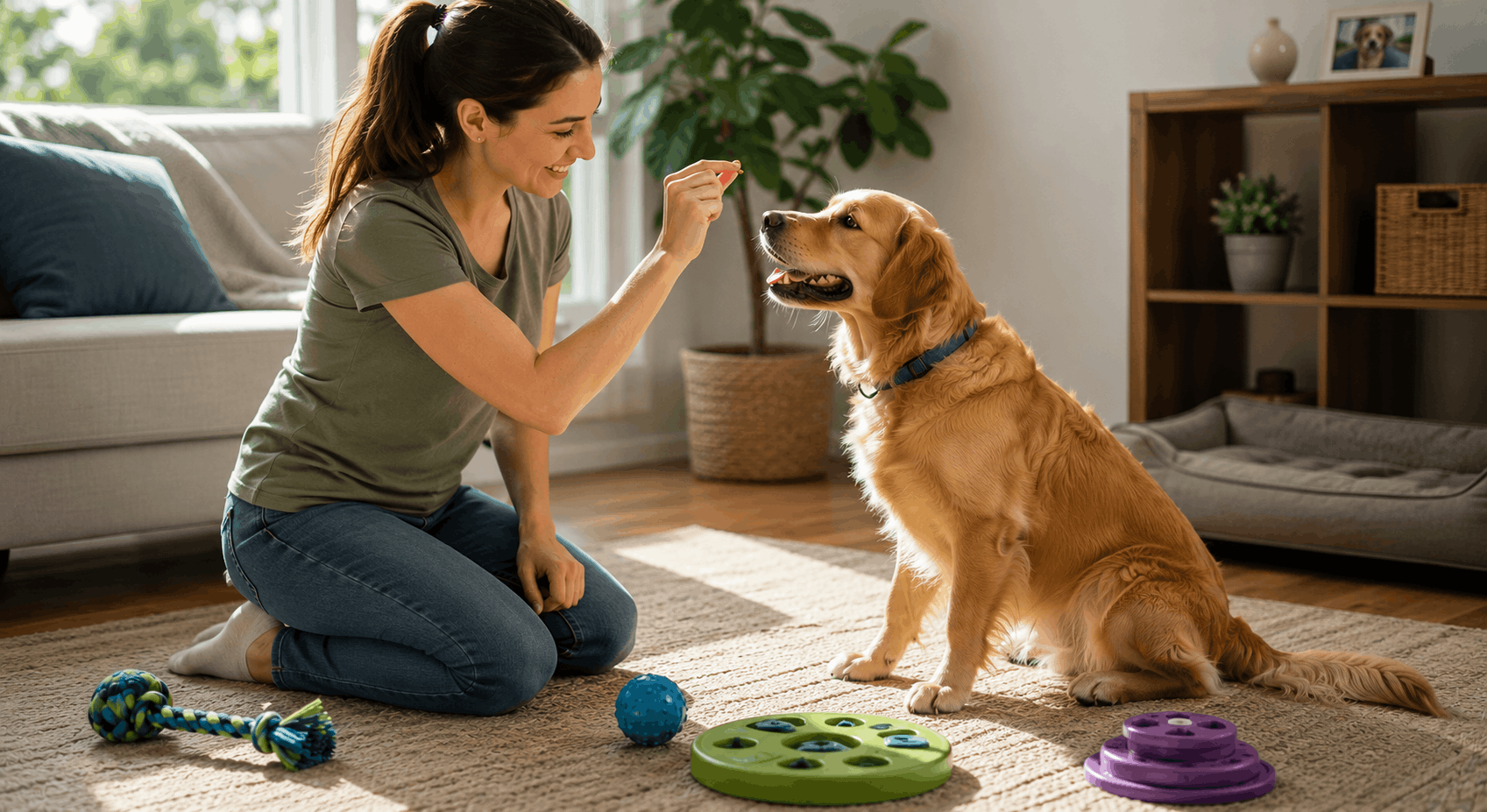
Positive reinforcement is especially useful for building new skills. Food, toys, praise, play, sniffing, and access to activities can all function as rewards. The best choice depends on what your dog values.
Training should still account for sleep, exercise, health, and emotional state. A frightened, exhausted, or uncomfortable dog may struggle to learn. Therefore, good behavior plans consider the whole dog.
Start the Morning With Calm Behavior
Morning routines can become exciting because dogs quickly learn what happens next. Breakfast, walks, outdoor access, and attention may all occur within a short period. That excitement creates useful training opportunities.
Begin by rewarding calm behavior before opening a crate, door, or gate. You do not necessarily need a formal sit. Four paws on the floor or a brief pause may be enough.
Next, prepare breakfast while reinforcing appropriate waiting. If your dog jumps or crowds you, make the task easier. Reward the position you want rather than repeatedly correcting mistakes.
A Daily Dog Training Routine works best when training connects naturally with rewards your dog already wants. Calm behavior can make breakfast appear. Waiting at the door can lead to an outdoor trip.
Keep the morning simple. You are building predictable habits rather than testing your dog. Once those habits become strong indoors, gradually practice them around greater distractions.
Use Breakfast as a Training Opportunity
Meals provide a ready-made source of reinforcement. Instead of placing the entire breakfast into a bowl immediately, reserve a small portion for training. This can reduce the need for additional treats.
Practice two or three familiar behaviors before feeding. You might ask for a sit, hand target, or brief stay. Keep expectations appropriate for your dog’s current skill level.
Part of the meal can also go into a suitable puzzle feeder. Food-based enrichment encourages problem-solving and can slow some dogs down. However, supervise new feeding toys until you understand how your dog uses them.
When using food during a Daily Dog Training Routine, account for the dog’s total daily intake. Training calories can add up quickly. Using measured meal portions makes calorie control easier.
Meals should not become stressful obedience tests. If your dog is struggling, reduce the difficulty. The purpose is to practice communication while maintaining a positive feeding experience.
Practice Door Manners Before Every Walk
Doors naturally reward dogs because opening them leads somewhere interesting. That makes them ideal places to practice self-control. However, safety should remain the first priority.
Attach the leash before beginning the exercise. Ask for a behavior your dog understands, such as waiting briefly near the door. Then touch the handle and reward calmness.
Open the door only slightly at first. If your dog remains composed, continue. If the dog rushes forward, calmly reset instead of turning the moment into a confrontation.
Over time, your dog can learn that calm behavior makes the door open. This lesson has practical value beyond obedience. It can reduce chaotic departures and improve everyday handling.
Use barriers when necessary. Training should never be your only protection against a dog escaping into an unsafe area. Secure equipment and good habits should work together.
Turn Walks Into Short Training Sessions
Walks provide exercise, enrichment, and exposure to changing environments. They also create countless opportunities for practice. However, the entire walk does not need to become a formal lesson.
Begin in a relatively quiet area. Reward your dog for checking in with you or walking with slack in the leash. Then allow time for sniffing and exploration.
A Daily Dog Training Routine should include these real-life rewards whenever possible. For example, several steps of loose-leash walking can lead to permission to sniff. This teaches the dog that cooperation does not eliminate enjoyable activities.
When distractions appear, increase distance if your dog struggles to respond. Distance can make training easier without requiring punishment. Gradually work closer as your dog gains confidence.
Keep safety in mind during hot, cold, or severe weather. Adjust walk length and intensity to the dog’s age, breed, health, and fitness. Ask your veterinarian about exercise limitations when necessary.
Build Reliable Attention Throughout the Day
Attention is useful because many behaviors depend on your dog noticing you. However, constantly demanding eye contact can become frustrating. Instead, reward natural check-ins during everyday activities.
When your dog voluntarily looks toward you on a walk, mark and reward the behavior. Do the same when the dog checks in around mild distractions. Over time, those voluntary responses may become more frequent.
You can also practice name recognition. Say your dog’s name once in a calm voice. Reward the dog for turning toward you.
Avoid repeating the name continuously when the dog is unlikely to respond. Repetition can weaken its usefulness. Instead, reduce distractions and create easier practice opportunities.
A few successful repetitions throughout the day are enough. Reliable attention develops through many positive experiences. It should not require your dog to stare at you constantly.
Add Recall Practice in Safe Places
Recall can become one of the most valuable behaviors your dog learns. However, it requires gradual practice. Begin indoors or in a securely enclosed area with minimal distractions.
Use a clear recall cue and encourage your dog to move toward you. Reward generously when the dog arrives. Make returning to you consistently worthwhile.
Never practice off leash in an unsecured location before recall is reliable. A long line can provide additional safety during suitable outdoor training. Make sure the equipment is appropriate and used correctly.
Adding recall to a Daily Dog Training Routine allows frequent practice without exhausting the dog. Call your dog between rooms or during controlled play. Keep most repetitions easy and successful.
Avoid calling your dog only when fun ends. Sometimes reward the recall and release the dog back to the activity. This helps prevent the cue from always predicting something disappointing.
Practice Calm Greetings Instead of Jumping
Dogs often jump because greetings are exciting and jumping may have earned attention before. Rather than focusing only on stopping the behavior, teach an alternative. Four paws on the floor is a practical starting point.
Practice first with familiar people. Reward the dog before excitement becomes overwhelming. The visitor can provide attention while the dog remains calm.
If jumping begins, reduce the intensity of the greeting. Give the dog more space or pause interaction briefly. Then create another opportunity for success.
Your Daily Dog Training Routine can include greeting practice whenever household members return home. Consistent expectations make the lesson clearer. However, real visitors may require additional management.
Gates or leashes can prevent chaotic greetings while training develops. They are management tools rather than signs of failure. Preventing repeated jumping can make new habits easier to establish.
Teach a Settle Routine for Quiet Time
Calm behavior is a skill worth teaching. Many owners reward energetic behavior through walks, games, and attention but rarely reinforce relaxation. Dogs can learn that settling also produces good outcomes.
Choose a mat or bed and place it somewhere relatively quiet. Reward your dog for approaching it. Then gradually reinforce standing, sitting, or lying on the surface.
Once your dog lies down comfortably, reward periods of relaxation. Deliver treats calmly rather than creating excitement. Increase duration in small steps.
Eventually, practice while you eat, work, or watch television. Add mild distractions only after the basic behavior becomes familiar. The mat can become a predictable place for calmness.
Do not force an anxious dog to remain in position. If your pet cannot settle, consider whether the environment is too difficult. Fear, pain, insufficient rest, or unmet needs can also affect relaxation.
Use Play to Reinforce Good Choices
Play can be a powerful reward. Many dogs value tugging, chasing, retrieving, or searching as much as food. Therefore, games can become part of training rather than something completely separate.
Before starting tug, ask for one easy behavior. Reward success by beginning the game. After a short period, practice releasing and restart the fun.
Fetch can work similarly. A dog might briefly wait before you throw the ball. Returning the toy can make another throw possible.
When play becomes part of a Daily Dog Training Routine, avoid turning every game into a demanding obedience session. Dogs also need opportunities for uncomplicated fun. A few training moments are enough.
Monitor excitement and physical fatigue. Repetitive sprinting, jumping, or sharp turns can be demanding. Adjust games to your dog’s fitness and health.
Capture Good Behavior You Did Not Ask For
Some of the best training opportunities happen without a command. Your dog may quietly lie down, ignore a household sound, or choose not to jump. These spontaneous choices are worth noticing.
Rewarding naturally occurring behavior is often called capturing. You simply mark the desirable action and provide reinforcement. Over time, the dog may offer that behavior more frequently.
A Daily Dog Training Routine becomes more powerful when owners stop waiting only for mistakes. Notice the moments when your dog is already doing something useful. Calm behavior often goes unrewarded because it causes no problems.
Keep rewards appropriate to the behavior. If your dog is relaxing, deliver reinforcement quietly. An excited celebration could interrupt the calm state you wanted to encourage.
Capturing also teaches owners to observe more carefully. Better observation improves timing. In turn, clearer timing can make training easier for the dog to understand.
Use Afternoon Enrichment to Prevent Boredom
Mental enrichment can complement physical exercise. Scent games, food puzzles, simple searches, and short training sessions give dogs opportunities to think. These activities can be especially useful during bad weather.
Try hiding a favorite toy somewhere easy. Encourage your dog to search for it. As the dog improves, gradually choose more challenging locations.
Food puzzles can also provide enrichment. Use measured portions from the daily diet when possible. This prevents enrichment from adding large numbers of unplanned calories.
Training itself can be mentally tiring. Five minutes of learning a new behavior may provide more challenge than repeatedly practicing an easy sit. Balance new skills with familiar successes.
Remember that enrichment should not create constant stimulation. Dogs need substantial rest too. A balanced routine includes activity, learning, social interaction, and quiet recovery.
Keep Training Sessions Short and Focused
Longer does not automatically mean better. Once concentration drops, mistakes may increase and training can become frustrating. Short sessions make it easier to maintain quality.
Choose one clear goal before you begin. For example, practice three successful mat repetitions rather than trying to teach five different skills. Stop while your dog remains interested.
Several brief sessions can fit naturally into a Daily Dog Training Routine. Practice before meals, during walks, or between household tasks. These small sessions can accumulate into meaningful learning.
Watch your dog’s body language. Sniffing, wandering away, scratching, or losing interest may indicate a need for a break. However, context matters because those behaviors can have several causes.
Training should feel achievable. If your dog repeatedly fails, simplify the task. Success creates better opportunities for reinforcement and learning.
Increase Distractions Gradually
A dog that performs perfectly in the kitchen may struggle in the garden. This does not necessarily mean stubbornness. Dogs often need help learning that the same behavior applies in different environments.
Begin new skills somewhere quiet. Once the response becomes reliable, add one manageable challenge. This could mean practicing near an open doorway or in a quiet outdoor area.
Avoid increasing distance, duration, and distraction simultaneously. Changing one factor at a time makes progress easier to understand. If performance drops sharply, reduce the challenge.
Rewards may also need to become more valuable in difficult settings. Plain kibble might work indoors but lose value near exciting smells. Choose reinforcement based on the situation.
Progress is rarely perfectly linear. Dogs have easier and harder days. Adjusting the environment is part of effective training rather than a setback.
Build Evening Manners Into the Household Routine
Evenings often involve dinner, visitors, television, or family activity. These situations provide useful opportunities to practice calm behavior. They can also reveal areas where the dog needs more support.
During your meal, encourage the dog to settle in an appropriate location. A mat, bed, or safe resting space can provide a clear alternative to begging. Reward quiet behavior periodically.
If the doorbell triggers excitement, practice at easier levels outside real visitor situations. Recorded sounds or controlled practice can help some dogs. However, significant fear or aggression requires qualified professional guidance.
Include a few simple behaviors before the dog’s evening meal. Then allow the household to relax. Training should support daily life rather than dominate it.
Predictable evening routines can help some dogs transition toward rest. Reduce highly stimulating activities near bedtime if they make settling difficult.
Track Progress Instead of Expecting Perfection
Behavior changes gradually. One successful day does not mean a skill is complete, and one difficult day does not erase previous learning. Look for patterns over several weeks.
Keep simple notes about the behaviors you are working on. Record where training occurred and what distractions were present. This information can reveal why certain situations remain difficult.
Your Daily Dog Training Routine should evolve as your dog’s skills improve. Easy behaviors need less intensive practice over time. You can then focus on new goals or more challenging environments.
Set realistic expectations for age and experience. Puppies have developing attention and impulse control. Newly adopted dogs may also need time to adjust before showing their typical behavior.
Celebrate small improvements. A dog that waits two seconds today instead of rushing immediately has made progress. Small successes become stronger habits through repetition.
Know When Professional Help Is Needed
Routine manners can often improve through consistent home training. However, some behavior concerns need professional support. Aggression, severe fear, resource guarding, and significant reactivity can create safety risks.
Sudden behavior changes also deserve veterinary attention. Pain and illness can affect tolerance, sleep, movement, and social behavior. Medical causes should not be overlooked.
Choose trainers who explain their methods and use humane, evidence-based approaches. Ask how they handle mistakes and fearful behavior. Clear answers can help you evaluate their approach.
A Daily Dog Training Routine may still form part of a professional behavior plan. However, complex cases require more than repeating basic cues. Understanding why the behavior occurs is essential.
Seeking help early can prevent unsafe situations from becoming more established. Professional support should make training clearer and safer for everyone involved.
Conclusion
A Daily Dog Training Routine can make good behavior part of ordinary life. You do not need long training sessions or complicated equipment. Instead, use short opportunities around meals, walks, doors, greetings, play, and quiet time.
Start with simple skills and reward successful choices. Practice attention, recall, loose-leash walking, calm greetings, and settling at an appropriate level. Then increase distractions gradually as your dog improves.
Remember to reward good behavior that happens naturally. A dog lying quietly or checking in voluntarily is already making a useful choice. Those moments can become powerful learning opportunities.
Balance training with exercise, enrichment, sleep, and appropriate veterinary care. Dogs learn better when their physical and emotional needs are met. If serious behavior problems appear, seek qualified professional support.
Most importantly, aim for consistency rather than perfection. A few minutes of thoughtful practice each day can build strong habits over time. Clear communication and positive reinforcement can help your dog become a calmer, more confident companion.
FAQ
1. How many times a day should I train my dog?
Several short sessions can work better than one long lesson. The ideal amount depends on your dog’s age, attention, experience, and training goals. Even a few minutes during normal daily activities can provide useful practice.
2. How long should each dog training session last?
Many dogs benefit from sessions lasting only a few minutes. Stop before concentration drops or frustration develops. New puppies and easily distracted dogs may need particularly short sessions.
3. Should I use treats every time my dog behaves correctly?
Food can be useful while teaching new behaviors, but it is not the only reward. Play, praise, sniffing, toys, and access to activities can also reinforce good choices. As skills improve, rewards can become more varied.
4. What should I do when my dog ignores a cue?
Avoid immediately assuming your dog is being stubborn. The environment may be too distracting, or the behavior may not be fully learned. Reduce the difficulty and create an easier opportunity for success.
5. Can older dogs still learn new behaviors?
Yes, adult and senior dogs can continue learning throughout life. Training may need adjustments for hearing, vision, mobility, or medical conditions. Short, positive sessions can provide useful mental stimulation at many ages.