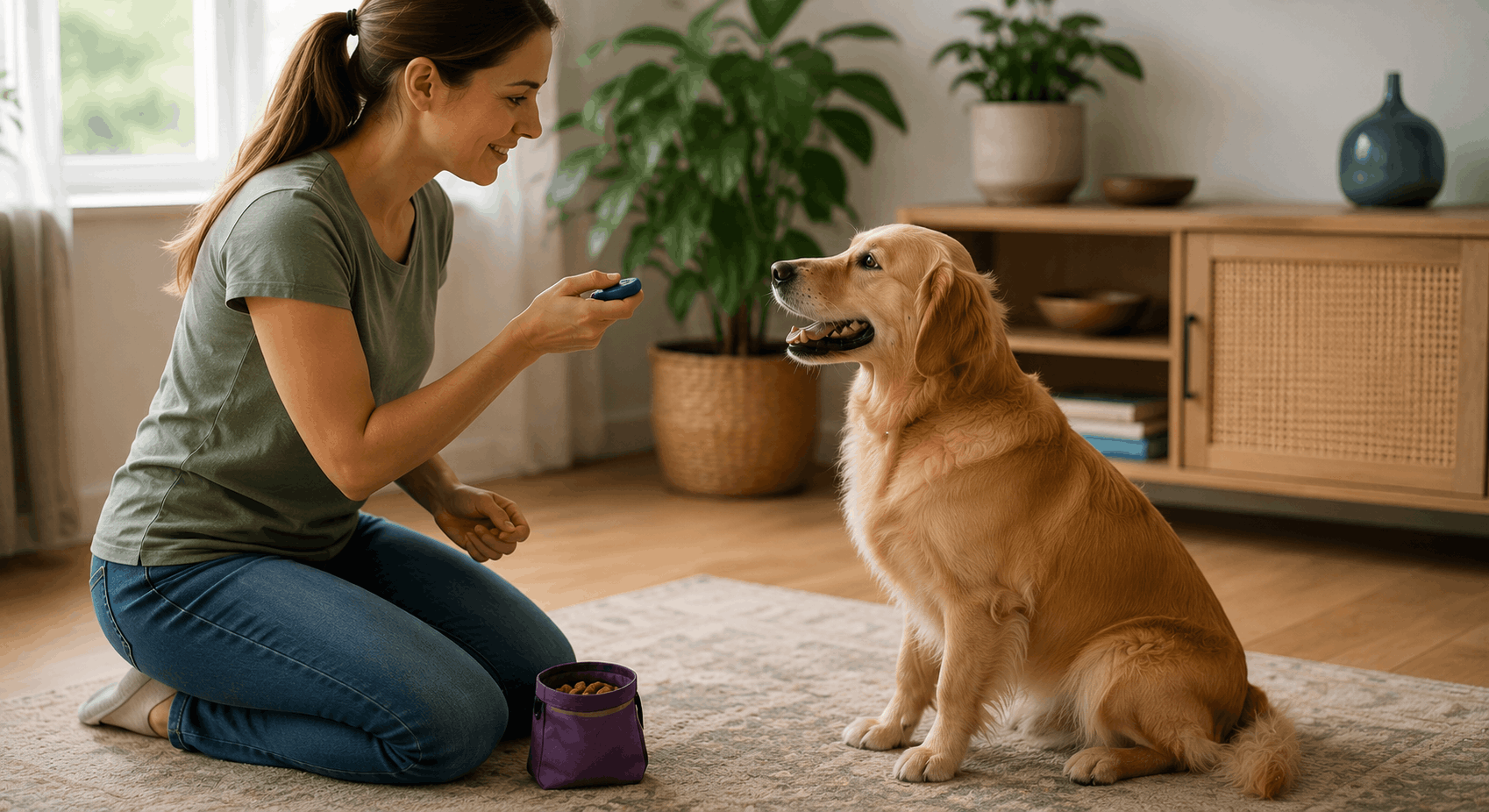
Clicker Training for Dogs gives owners a clear way to tell their pets exactly when they make a good choice. The small device creates a consistent sound that marks the desired behavior. A reward follows, helping the dog understand which action earned it.
This method is based on positive reinforcement and precise timing. Instead of waiting for unwanted behavior and correcting it, owners can actively reinforce useful choices. As a result, training can become clearer and more enjoyable for both dog and handler.
A clicker is not a magic solution for every behavior problem. However, it can improve communication when used correctly. The method works best with suitable rewards, short sessions, realistic goals, and attention to the dog’s comfort.
What Clicker Training Actually Teaches Your Dog
A clicker is a small mechanical device that produces a brief, distinctive sound. During training, that sound becomes a marker. It tells the dog that the behavior performed at that exact moment was correct.
The click itself is not normally the reward. Instead, it predicts something the dog values, such as food, play, or another suitable reinforcer. This connection gives the sound meaning.
Owners first establish that connection through a simple process often called charging the clicker. They click and then immediately provide a reward. After enough repetitions, many dogs begin expecting something positive after hearing the sound.
Clicker Training for Dogs becomes especially useful because human praise can vary in timing and tone. A short click is more precise. That precision can help the dog identify the exact movement or choice being reinforced.
For example, imagine teaching a dog to lie on a mat. You can click the instant all four paws reach the mat. Then you provide the reward, making the successful choice easier to recognize.
The process should remain calm and predictable. Fast, confusing repetitions can reduce clarity. Instead, focus on one simple goal at a time.
Why Positive Reinforcement Can Encourage Calm Behavior
Dogs repeat behaviors that produce worthwhile outcomes. Therefore, owners can strengthen calm choices by making those choices rewarding. This principle is central to positive reinforcement training.
Consider a dog that jumps whenever someone enters the home. If attention always follows jumping, the behavior may continue. Instead, the owner can reinforce four paws on the floor or another calm alternative.
Timing matters greatly. Click too early, and you may mark a different action. Click too late, and the dog may already have moved into another behavior.
With Clicker Training for Dogs, the marker helps bridge the brief gap between correct behavior and the reward. This can make training more precise. The dog receives clearer information about what worked.
Calmness should also be taught as something the dog can do, rather than simply expecting the dog to stop moving. Settling on a bed, sitting before doors, and waiting politely are all trainable behaviors.
However, calm behavior also depends on exercise, sleep, environment, health, and emotional state. Training works best when those needs receive proper attention too.
How to Introduce the Clicker Correctly
Start in a quiet room with minimal distractions. Prepare several small treats that your dog enjoys. Keep the first session short so the experience remains easy.
Click once and then give a treat. Repeat the sequence several times without asking for any particular behavior. The goal is simply to create a reliable association between the sound and the reward.
Avoid clicking repeatedly without rewarding afterward. Once the click predicts reinforcement, failing to follow through can weaken its meaning. Therefore, treat every deliberate click as a promise.
When introducing Clicker Training for Dogs, watch your pet’s reaction to the sound. Some noise-sensitive dogs may find a standard clicker startling. A quieter marker or verbal signal may suit them better.
Do not hold the clicker directly beside your dog’s ears. The device marks behavior; it is not a remote control. Keep your hand in a comfortable position and focus on accurate timing.
Once your dog understands the marker, begin with an easy behavior. A glance toward you, a sit, or touching a target can provide a simple starting point.
Teaching a Dog to Settle on a Mat
Mat training gives a dog a clear place to relax. It can be useful during meals, visitors, household activities, or quiet evenings. The mat becomes a practical environmental cue.
Place the mat on the floor without forcing your dog onto it. When the dog looks toward or approaches it, mark that interest. Then provide a reward.
Gradually raise your expectations. First, reward approaching the mat. Later, mark stepping onto it, standing there, sitting, and eventually lying down.
Clicker Training for Dogs allows these small steps to be communicated precisely. You do not need to wait until the entire finished behavior appears. Instead, you can reinforce progress toward the final goal.
Once lying on the mat becomes easy, begin rewarding longer periods of relaxation. Increase duration gradually. Occasionally deliver treats calmly between clicks to support settled behavior.
Eventually, practice in different rooms and with mild distractions. Do not rush into difficult situations. Reliable calmness develops through many manageable successes.
Using a Clicker to Reduce Jumping
Jumping often works because it earns attention. People may talk, touch, push, or look at the dog. From the dog’s perspective, those reactions can still be rewarding.
Teach an alternative behavior before testing exciting greetings. Sitting can work for some dogs, while simply keeping four paws down may feel more natural for others. Choose a goal that your dog can perform reliably.
Practice with one familiar person first. Mark the desired behavior before excitement becomes overwhelming. Then reward the dog while the paws remain on the floor.
Using Clicker Training for Dogs makes that exact moment easier to identify. The dog learns which behavior produces reinforcement. Over repeated sessions, the calmer choice can become more predictable.
If jumping occurs, avoid turning the situation into a physical struggle. Reset calmly and make the next repetition easier. Training should provide information rather than escalating excitement.
Real visitors are much harder than practice partners. Therefore, use management such as gates, leashes, or distance while the skill develops. Management prevents unwanted repetitions while training catches up.
Building Better Door Manners
Doors create excitement because they often predict walks, visitors, gardens, or other rewarding experiences. Consequently, dogs may rush, bark, or jump when a door begins opening. This makes door manners a useful training goal.
Start when nothing exciting is happening. Approach the door and reward a calm position. Then touch the handle and mark the dog for remaining composed.
Progress slowly. Move the handle, open the door slightly, and close it again. Each step should remain easy enough for the dog to succeed.
Clicker Training for Dogs can make these tiny stages clear. Rather than repeatedly telling the dog what not to do, reinforce the behavior you want. Waiting becomes the action that makes progress toward the doorway possible.
Never rely solely on training where safety is involved. Use leashes, gates, secure fencing, or other barriers when an open door could lead to danger. Training and management should support each other.
Over time, add realistic distractions. Practice with family members moving nearby or mild outdoor activity. Increase difficulty only when your dog remains successful.
Rewarding Calmness Around Everyday Distractions
Many dogs behave well in quiet rooms but struggle outside. This does not mean they forgot their training. Instead, the environment became more difficult.
Dogs do not automatically generalize behaviors across every setting. A calm sit in the kitchen is different from a calm sit near another dog. Therefore, skills need practice in several environments.
Begin with enough distance from distractions that your dog can still think and take rewards. Mark calm observation, checking in with you, or another desired response. Gradually reduce distance when appropriate.
Clicker Training for Dogs works well here because you can capture brief moments of good decision-making. A quick glance away from a distraction may be worth marking. Those small choices can grow into more reliable self-control.
Do not force a frightened or highly aroused dog closer to a trigger. Distance can be an important training tool. If your dog cannot eat, respond, or settle, the situation may be too difficult.
For significant fear, aggression, or reactivity, seek qualified professional guidance. Safety should come before training progress.
Teaching Polite Leash Behavior
Loose-leash walking requires more than stopping pulling. Dogs must learn where movement is rewarding and how to stay connected with the handler. This takes practice, especially in stimulating environments.
Begin somewhere quiet. Mark your dog for being near you with slack in the leash. Then reward in a position that supports the walking pattern you want.
Take only a few steps at first. If the leash remains loose, mark and reward again. Gradually increase the number of steps between rewards as the behavior improves.
Through Clicker Training for Dogs, owners can communicate the exact walking moments they appreciate. This is often clearer than waiting for pulling and then reacting. The dog learns what earns continued movement and reinforcement.
Sniffing can also function as a reward. After several successful steps, release the dog to investigate an appropriate area. Real-life rewards can make training more useful.
Choose safe equipment that fits correctly. If pulling is severe or walking feels unsafe, a qualified trainer can help create an appropriate plan.
Capturing Calm Behavior Without Giving Commands
Not every good behavior needs to begin with a cue. Sometimes the most useful training happens when the dog naturally makes a desirable choice. Trainers often call this capturing.
Suppose your dog lies quietly while you work. Instead of ignoring that moment, calmly mark it and provide a reward. Over time, relaxation can become more rewarding.
The same approach works when a dog chooses not to bark at a mild sound. You can reinforce looking at you, remaining settled, or returning to rest. These everyday moments provide valuable practice.
Clicker Training for Dogs makes capturing especially precise. You can identify a brief desirable choice without interrupting it with excessive talking. However, deliver rewards calmly when your goal is relaxation.
Avoid creating a dog that constantly stares at you waiting for food. Vary reinforcement as behaviors become established. Sometimes environmental rewards or quiet praise can maintain useful habits.
Calmness develops gradually. Reward genuine relaxation while also meeting the dog’s physical and mental needs.
Why Short Training Sessions Work Better
Long sessions can become tiring for both dogs and humans. As concentration declines, timing becomes less accurate and frustration can increase. Short practice periods are often more productive.
A few focused minutes may be enough for one skill. You can repeat another brief session later in the day. This approach creates multiple opportunities for successful learning.
Stop before your dog loses interest. Ending after a good repetition helps maintain enthusiasm. Training does not need to continue until mistakes appear.
When practicing Clicker Training for Dogs, decide your goal before starting. For example, you might focus only on stepping onto a mat. Clear criteria improve your timing.
Keep rewards small if using food. Frequent reinforcement should not accidentally add excessive calories. You can use part of the dog’s normal food when appropriate.
Sessions should also match the individual dog. Puppies and easily distracted dogs may need especially brief practice. More experienced dogs can often work longer without losing focus.
Choosing Rewards Your Dog Actually Values
Food is popular because it is quick to deliver and easy to divide into small portions. However, dogs differ in what they find rewarding. Some prefer toys, play, access to sniffing, or social interaction.
Reward value can also change with the environment. Ordinary kibble may work in your living room but fail outdoors. More challenging situations may require stronger reinforcement.
Observe your dog’s choices. A reward should improve the behavior you are training. If the dog repeatedly disengages, the reinforcement may be too weak or the task too difficult.
Effective Clicker Training for Dogs depends on consequences the individual dog actually wants. The click marks the behavior, but the following outcome gives that marker value. Therefore, choose rewards thoughtfully.
Be cautious with rich treats if your dog has dietary restrictions. Training food should fit the dog’s overall diet. Ask your veterinarian about suitable options when medical concerns affect feeding.
You can also use everyday rewards. Opening a door, greeting someone, or being released to sniff can reinforce calm behavior when timed correctly.
Common Clicker Training Mistakes
One common mistake is clicking after the desired behavior has ended. Timing errors can accidentally reinforce another action. Practice your coordination without the dog if necessary.
Another mistake involves clicking repeatedly before delivering one reward. A click should normally mark one successful moment. Keep the sequence simple and predictable.
Some owners also use the clicker to get attention. They click when the dog ignores them, hoping the sound will make the dog return. This changes the marker’s purpose and can create confusion.
Clicker Training for Dogs also becomes less effective when criteria increase too quickly. If your dog succeeds repeatedly and then suddenly fails, the next step may be too difficult. Reduce the challenge and rebuild.
Avoid using the clicker as a threat or interruption. The sound should predict positive consequences. It should not become associated with punishment.
Finally, remember that mistakes provide information. Adjust the environment, reward, distance, or difficulty. Good training is flexible rather than confrontational.
When to Add Verbal Cues
A dog can learn a behavior before learning its name. In fact, teaching the action first often makes cue training easier. Once the behavior occurs reliably, you can begin attaching a word.
For example, teach the dog to go to a mat through shaping. When the dog predictably moves toward the mat, introduce your chosen cue before the behavior begins. Then mark and reward success.
Avoid repeating the cue many times. Saying a word over and over can teach the dog that the first version has little meaning. Give the cue once when success is likely.
As Clicker Training for Dogs progresses, the marker remains useful for confirming correct responses. However, you will not need to click every familiar behavior forever. Reinforcement schedules can gradually become more varied.
Use consistent cue words within the household. If everyone uses different terms, learning may take longer. Agree on simple words and expectations.
Body language matters too. Dogs notice gestures and movement easily. Be aware of accidental signals that may become stronger than your verbal cue.
Do You Need to Use the Clicker Forever?
The clicker is primarily a teaching tool. Once a behavior is well learned, you can reduce how often you use it for that particular skill. The dog does not need to hear a click after every successful sit for life.
Rewards should also become more varied as skills strengthen. Instead of giving food every time, use praise, play, access to activities, or occasional treats where appropriate. However, valuable behaviors should still receive reinforcement.
New or difficult situations may require stronger rewards again. A dog that waits calmly at home may need more support near exciting distractions. Training should adapt to difficulty.
You can return to Clicker Training for Dogs whenever you teach something new or refine an existing behavior. The familiar marker can make new lessons easier to understand. Many owners keep a clicker available for this reason.
Do not remove reinforcement too quickly. Behaviors that stop producing useful outcomes can weaken. Instead, shift gradually toward natural and intermittent rewards.
When Professional Training Support Is Important
Many everyday manners can be taught at home. However, some behavior concerns require more experience. Aggression, serious resource guarding, severe fear, or intense reactivity deserve professional assessment.
Sudden behavior changes can also have medical causes. Pain and illness may affect tolerance, sleep, movement, or social behavior. Therefore, contact your veterinarian when a significant change appears unexpectedly.
Choose trainers who explain their methods clearly and prioritize humane, evidence-based approaches. Ask how they handle fear, mistakes, and unwanted behavior. A professional should be comfortable discussing safety and management.
Clicker Training for Dogs can form part of a professional behavior plan, but the tool alone does not treat complex problems. The underlying cause of the behavior matters. Qualified guidance can help identify appropriate goals.
For serious cases, your veterinarian may recommend a veterinary behaviorist or another qualified specialist. Early support can prevent problems from becoming more established.
Creating a Calm Daily Training Routine
Consistency matters more than occasional long training sessions. Look for small opportunities throughout the day. Doorways, meals, walks, visitors, and quiet evenings can all become useful practice moments.
Reinforce the behaviors you want to see more often. If your dog settles independently, notice it. When the leash remains loose, make that choice worthwhile.
Keep expectations realistic during exciting situations. Management tools can prevent rehearsing unwanted behavior while training develops. Gates, distance, leashes, and planned routines are practical supports.
As Clicker Training for Dogs becomes part of daily life, owners often begin noticing good behavior more quickly. That shift can improve communication. Instead of focusing mainly on mistakes, you actively build useful habits.
Remember that dogs need rest, exercise, enrichment, and opportunities to perform normal behaviors. A dog that cannot meet basic needs may struggle to settle. Training should support welfare rather than replace it.
Progress will not always be perfectly linear. Difficult days happen, so adjust the challenge and continue building from successful repetitions.
Conclusion
Clicker Training for Dogs can build calm, well-behaved habits by making successful choices easy to understand. The click precisely marks a desired behavior, while the reward encourages that behavior to happen again. Over time, simple repetitions can develop into reliable everyday manners.
Start with an easy association between the click and a reward. Then teach manageable behaviors such as mat settling, polite greetings, door manners, and loose-leash walking. Keep sessions short and increase difficulty gradually.
Calmness should be actively reinforced rather than treated as the absence of bad behavior. Notice when your dog settles, waits, disengages from distractions, or chooses appropriate behavior. Those moments are valuable training opportunities.
At the same time, respect your dog’s emotional and physical needs. Fear, excessive arousal, pain, and unsuitable environments can interfere with learning. Professional help is important when behavior creates safety concerns or changes suddenly.
Most importantly, focus on communication rather than perfection. Clear timing, worthwhile rewards, and consistent practice give dogs useful information. When training feels predictable and rewarding, calm behavior can become a natural part of everyday life.
FAQ
1. How quickly can a dog learn with a clicker?
Some dogs understand the marker-reward connection within a few short sessions. However, learning a complete behavior can take much longer. Progress depends on the dog, environment, reinforcement, and difficulty of the skill.
2. Can clicker training help an overexcited dog calm down?
It can reinforce specific calm behaviors such as settling, waiting, and keeping four paws on the floor. However, exercise, sleep, environment, and emotional state also matter. Severe overarousal may require professional guidance.
3. What should I do if my dog is scared of the clicking sound?
Do not force the dog to tolerate a sound that causes fear. Try a quieter clicker or use a consistent verbal marker instead. The marker should help learning without creating stress.
4. Do I have to give a treat every time I click?
During training, a deliberate click should be followed by reinforcement so the marker keeps its meaning. Once a behavior becomes reliable, you can reduce clicker use for that skill. Other appropriate rewards can also maintain established behaviors.
5. Can puppies learn calm behavior with a clicker?
Yes, puppies can learn simple behaviors through short, age-appropriate sessions. Keep expectations realistic and provide plenty of rest, play, and safe exploration. Early positive training can help establish useful habits as the puppy matures.