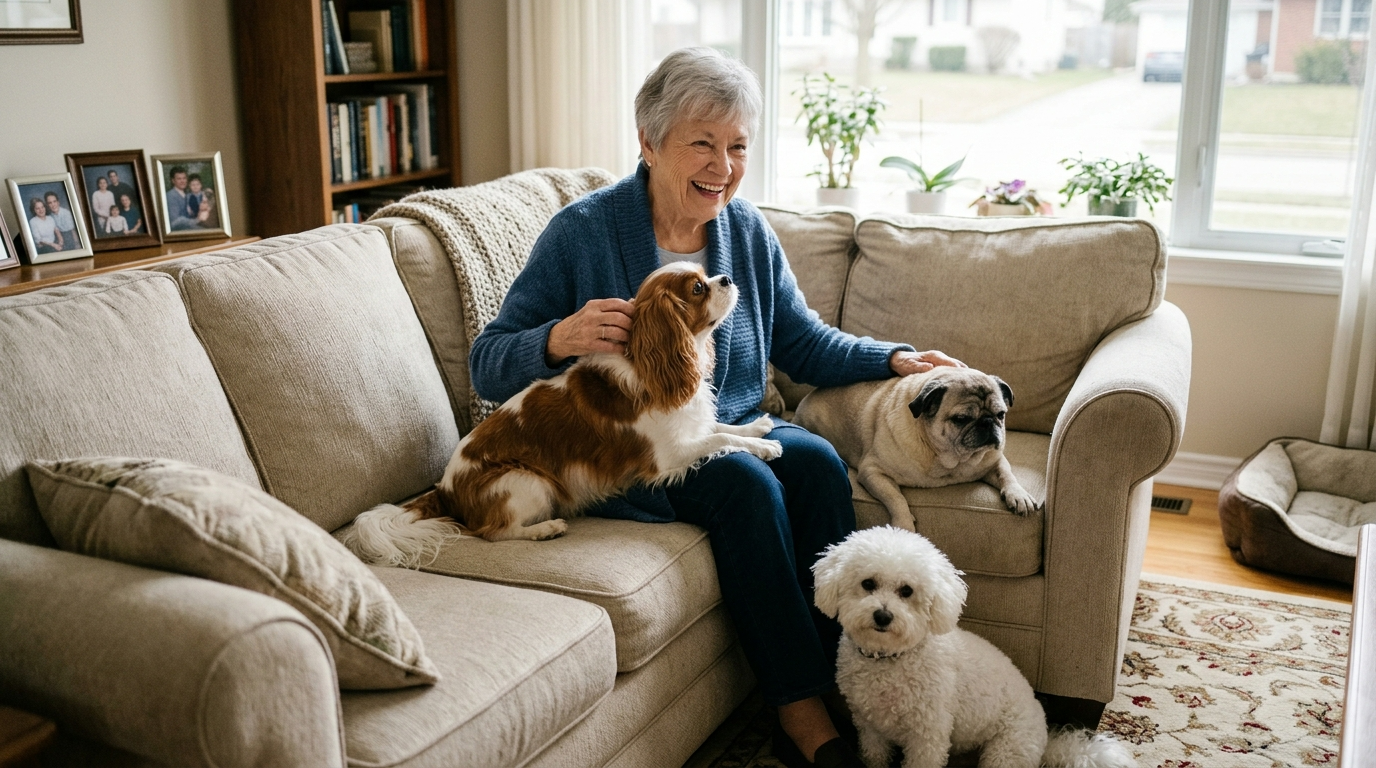
Choosing a canine companion later in life can bring joy, structure, and emotional comfort. However, selecting the best dog breeds for seniors requires thoughtful consideration of energy level, size, temperament, and care needs. Because lifestyle often changes in retirement, the right match ensures both safety and happiness.
A loving dog can reduce loneliness and encourage daily activity. At the same time, certain breeds adapt more easily to quieter households. Therefore, understanding which dogs offer calm companionship helps seniors make confident decisions.
While every dog has a unique personality, some breeds consistently demonstrate gentle behavior and manageable exercise needs.
What Seniors Should Consider Before Choosing a Dog
Before selecting from the best dog breeds for seniors, evaluate daily routines and physical comfort.
Energy level matters most. High-energy working breeds may overwhelm someone seeking a relaxed pace. Instead, moderate or low-energy dogs often fit better.
Size also plays a role. Larger dogs can be affectionate but may pull on leashes or require more strength to manage. Smaller breeds often prove easier to handle.
Additionally, grooming needs influence long-term satisfaction. Some breeds require frequent brushing or professional care. Therefore, choosing manageable maintenance levels reduces stress.
Finally, consider lifespan. A breed with moderate longevity may align better with long-term planning.
Cavalier King Charles Spaniel
The Cavalier King Charles Spaniel ranks among the best dog breeds for seniors due to its affectionate and adaptable nature.
These small companions thrive on closeness. They enjoy short walks but remain content lounging beside their owners.
Because they bond deeply, Cavaliers provide emotional comfort and consistent companionship. Their gentle demeanor makes them suitable for apartments or smaller homes.
Regular brushing maintains their silky coat. However, their grooming needs remain moderate compared to heavier-coated breeds.
Overall, this breed offers balance between activity and relaxation.
Shih Tzu
Shih Tzus were originally bred for companionship. Consequently, they excel in calm environments.
Among the best dog breeds for seniors, Shih Tzus stand out for their manageable size and affectionate personality.
They require short daily walks yet enjoy extended indoor relaxation. Their friendly nature suits quiet households.
Although their long coat demands grooming, many owners choose shorter trims for easier maintenance.
Because they prefer human interaction, Shih Tzus form strong emotional bonds.
Bichon Frise
The Bichon Frise offers cheerful energy without excessive hyperactivity.
As one of the best dog breeds for seniors, this breed adapts well to smaller living spaces.
Bichons enjoy gentle play sessions and moderate walks. Afterward, they settle comfortably indoors.
Their hypoallergenic coat may benefit allergy-sensitive individuals. However, regular grooming remains necessary.
Because of their friendly disposition, they respond well to positive reinforcement training.
Poodle (Miniature or Toy)
Poodles combine intelligence with manageable size.
Miniature and Toy Poodles frequently appear among the best dog breeds for seniors due to their trainability and low shedding coats.
These dogs enjoy mental stimulation. However, they do not require intense physical exercise.
Regular grooming keeps their coat healthy. Fortunately, many owners maintain practical trims.
Poodles also bond closely with their owners, providing loyal companionship.
Maltese
The Maltese breed thrives on affection and close contact.
Included among the best dog breeds for seniors, Maltese dogs remain gentle and adaptable.
They require minimal outdoor exercise, making them ideal for apartment dwellers.
Although their coat needs brushing, routine care remains straightforward.
Because they prefer human interaction, Maltese dogs often follow their owners around the house.
French Bulldog
French Bulldogs bring personality without high exercise demands.
Many consider them among the best dog breeds for seniors because of their sturdy yet compact build.
They enjoy short walks but avoid excessive activity. Therefore, they suit individuals with limited mobility.
French Bulldogs thrive on companionship and often form strong attachments.
Temperature regulation requires attention due to their short snouts. However, overall maintenance remains moderate.
Cocker Spaniel
Cocker Spaniels balance moderate activity with affectionate temperament.
While slightly more energetic than some small breeds, they remain manageable.
The best dog breeds for seniors often include Cocker Spaniels due to their gentle personality.
Regular grooming keeps their coat healthy. Daily walks satisfy their activity needs.
Because they interact well with family members, they offer warmth and companionship.
Greyhound
Greyhounds surprise many prospective owners.
Despite racing backgrounds, they relax extensively indoors.
Some experts include them among the best dog breeds for seniors because they prefer lounging after short walks.
Their calm indoor demeanor offsets their brief bursts of speed.
Additionally, Greyhounds often adapt well to apartment living.
Benefits of Owning a Dog in Later Life
Companionship reduces feelings of isolation.
The best dog breeds for seniors encourage light physical activity through daily walks.
Routine feeding and care provide structure.
Moreover, pet ownership supports emotional well-being.
Studies suggest interaction with dogs may lower stress levels.
Choosing the right breed enhances these benefits.
Training and Socialization Considerations
Even calm breeds require training.
The best dog breeds for seniors respond well to positive reinforcement methods.
Short, consistent sessions build confidence.
Socialization also matters, especially if visitors frequently enter the home.
Because predictable behavior reduces stress, training remains essential regardless of age.
Adoption vs Buying From Breeders
Adopting an adult dog may simplify the process.
The best dog breeds for seniors often appear in rescue centers.
Older dogs usually display established temperaments. Therefore, energy levels become easier to assess.
Rescue organizations frequently evaluate behavior, helping seniors find compatible companions.
Regardless of source, prioritize health screening and temperament compatibility.
Health and Veterinary Care
Routine veterinary visits ensure long-term well-being.
The best dog breeds for seniors should align with manageable medical needs.
Smaller breeds often live longer but may develop dental issues.
Larger breeds may require joint monitoring.
Budgeting for healthcare ensures responsible ownership.
Matching Personality to Lifestyle
Personality compatibility outweighs breed popularity.
The best dog breeds for seniors vary depending on daily routines and activity preferences.
Active seniors may prefer slightly more energetic companions.
Less active individuals may benefit from low-exercise breeds.
Meeting potential dogs beforehand helps assess chemistry.
Creating a Comfortable Environment
Prepare the home before bringing a dog home.
Install non-slip mats on smooth floors.
Provide a supportive bed to protect joints.
The best dog breeds for seniors thrive in safe, quiet spaces.
Accessible food and water stations simplify care.
Thoughtful preparation ensures smoother transitions.
Conclusion
Selecting the best dog breeds for seniors involves careful evaluation of energy level, size, grooming needs, and personality. A loving companion can enrich daily life, reduce loneliness, and encourage gentle activity. However, compatibility remains the most important factor.
By choosing a breed known for calm temperament and manageable care requirements, seniors can enjoy years of rewarding companionship. Whether adopting from a shelter or selecting a reputable breeder, thoughtful planning ensures a harmonious match.
With proper care, patience, and attention, the right dog becomes more than a pet. Instead, it becomes a loyal friend who enhances comfort, routine, and emotional well-being throughout retirement.
FAQ
- Are small dogs always better for older adults?
Not necessarily. Temperament and energy level matter more than size alone. - Can seniors manage slightly larger calm breeds?
Yes, if mobility and strength allow safe leash handling. - Should older adults adopt adult dogs instead of puppies?
Adult dogs often offer predictable temperaments and lower training demands. - How much daily exercise is realistic?
Short walks and light play usually meet the needs of relaxed companion breeds. - Do calm breeds require less training?
They still need consistent guidance, but steady temperaments often simplify the process.